Between Friday 2 and Friday 9 October, around 4,000 people came to 35 free events across Dublin. Twelve of those rooms were filmed. This is the week in the order it happened: what went on in them, who was there, and what people wrote about it afterwards.
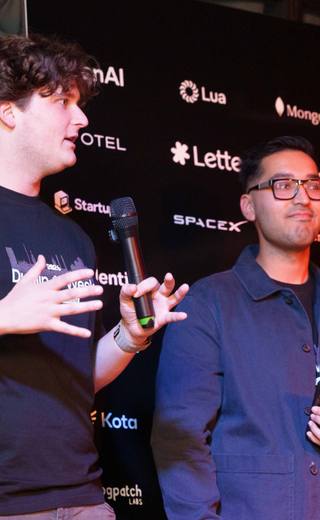
The week started at Baseline Community + Fund, which organised Dublin AI Week with Give(a)Go. Opening Night was the only event on Friday's calendar, and the one night of the week when the whole thing fit in a single room.
Partner logos on the wall, a queue for the backdrop, and by the time the first speakers picked up the microphone the sofas were full.
Watch the filmOpening Night · 0:28Opening the week.
02
Day 2 Saturday 3 October
Day 2, Saturday 3 October: Saturday belongs to the students
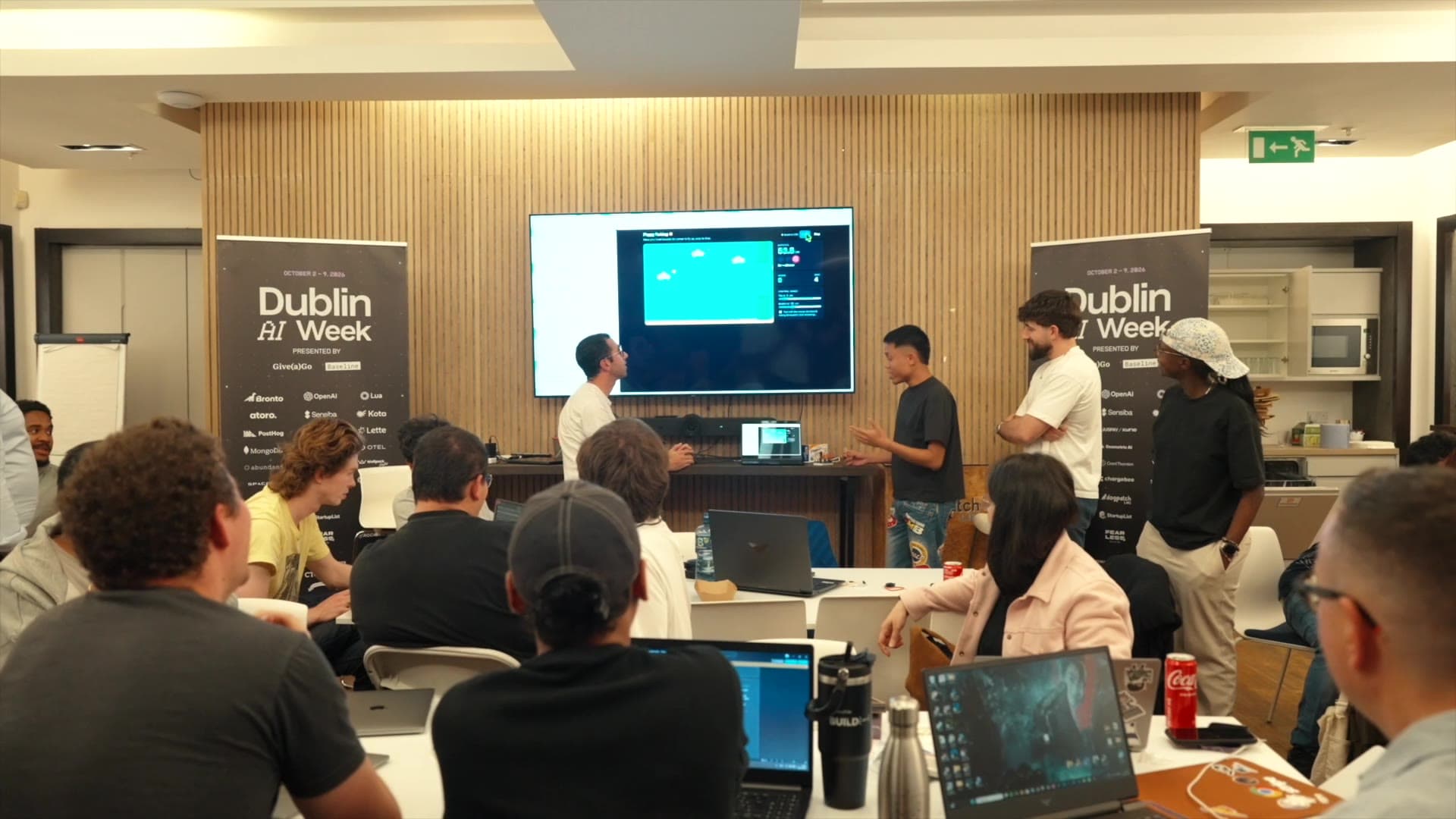
More than 500 students applied for MongoDB's Student Builder Day. The ones who got a place spent Saturday at Baseline building with MongoDB and Give(a)Go, and the top eight teams finished the day presenting to the room.
Day 3, Sunday 4 October: Thirty-two teams, one Sunday
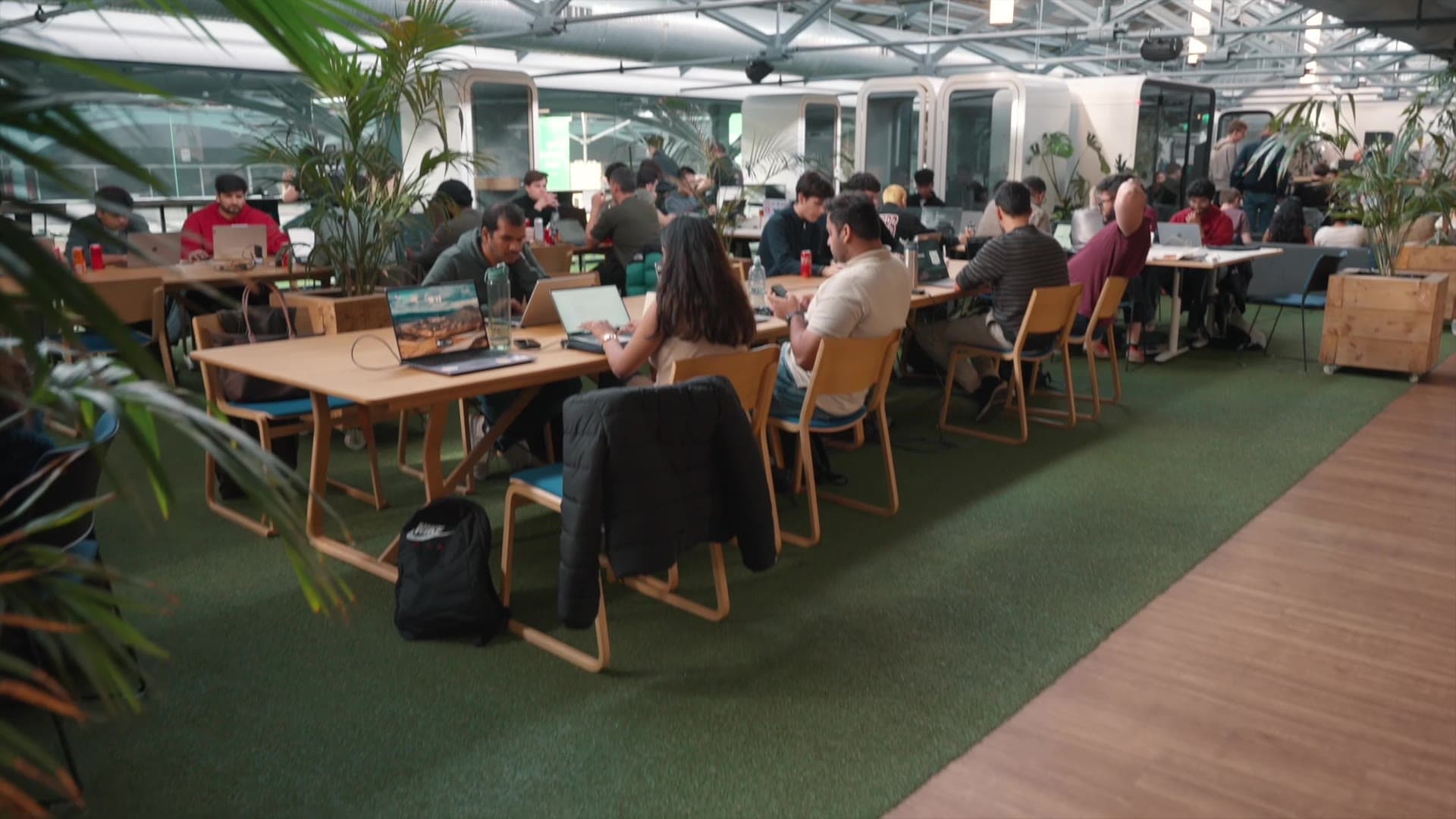
The brief for Build for Ireland was in the name. OpenAI, Give(a)Go and Dogpatch Labs hosted, and 32 teams spent the day on housing, renewable energy, traffic congestion, infrastructure and local services, under the glass roof of the CHQ building on Custom House Quay.
At the end of the day the top ten teams pitched to everyone else. GridSense took on the timing problem in Ireland's electricity grid. Flexplay and Vibra Scan won.
32 teams under one roof.
Pitches.
“Teams, ideas and six hours of building for Ireland.”
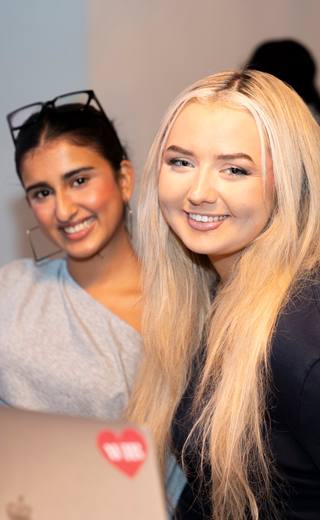
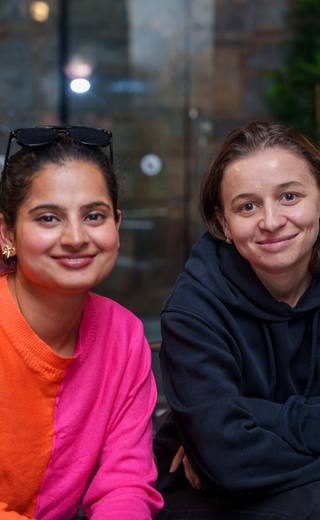
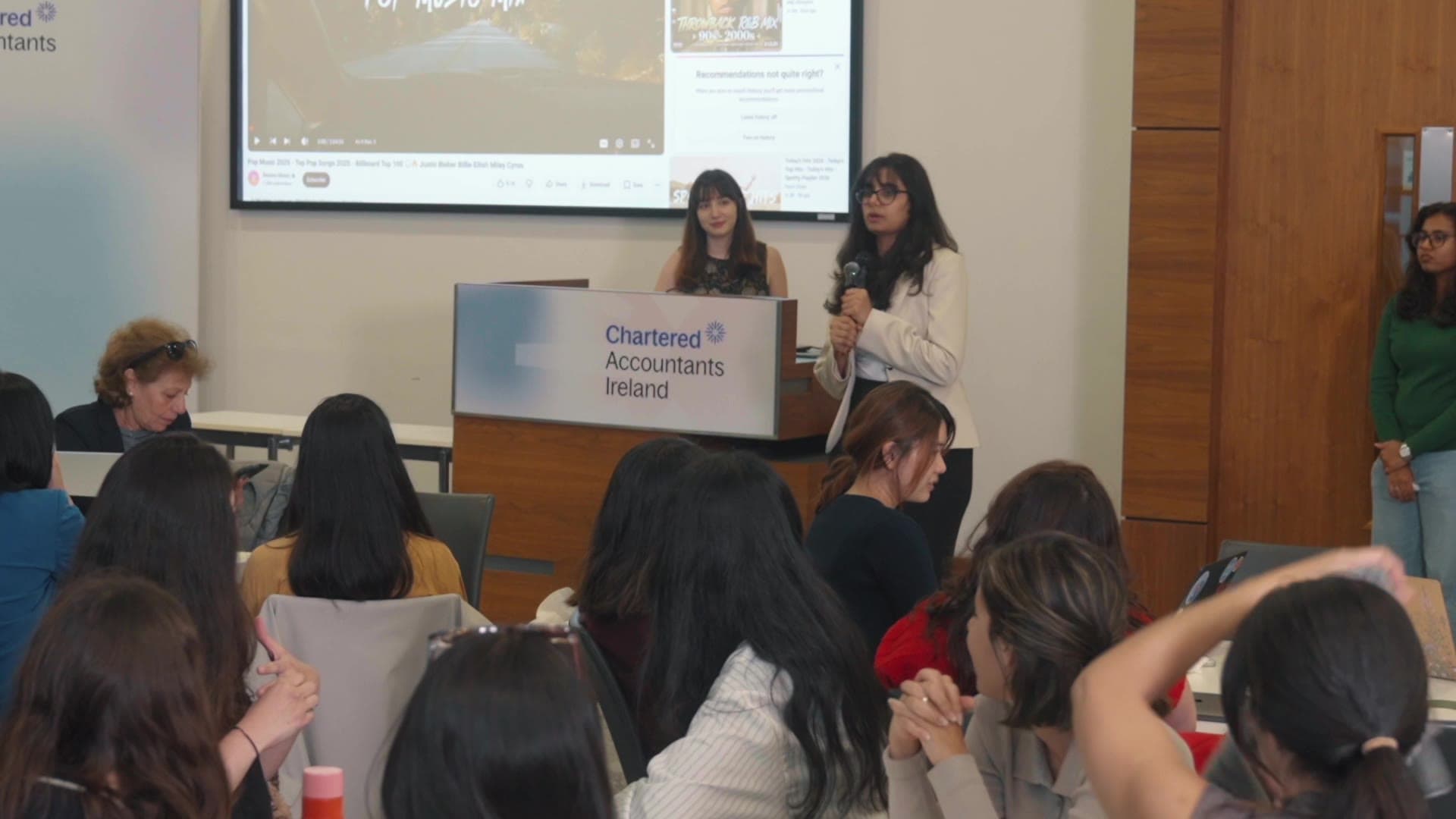
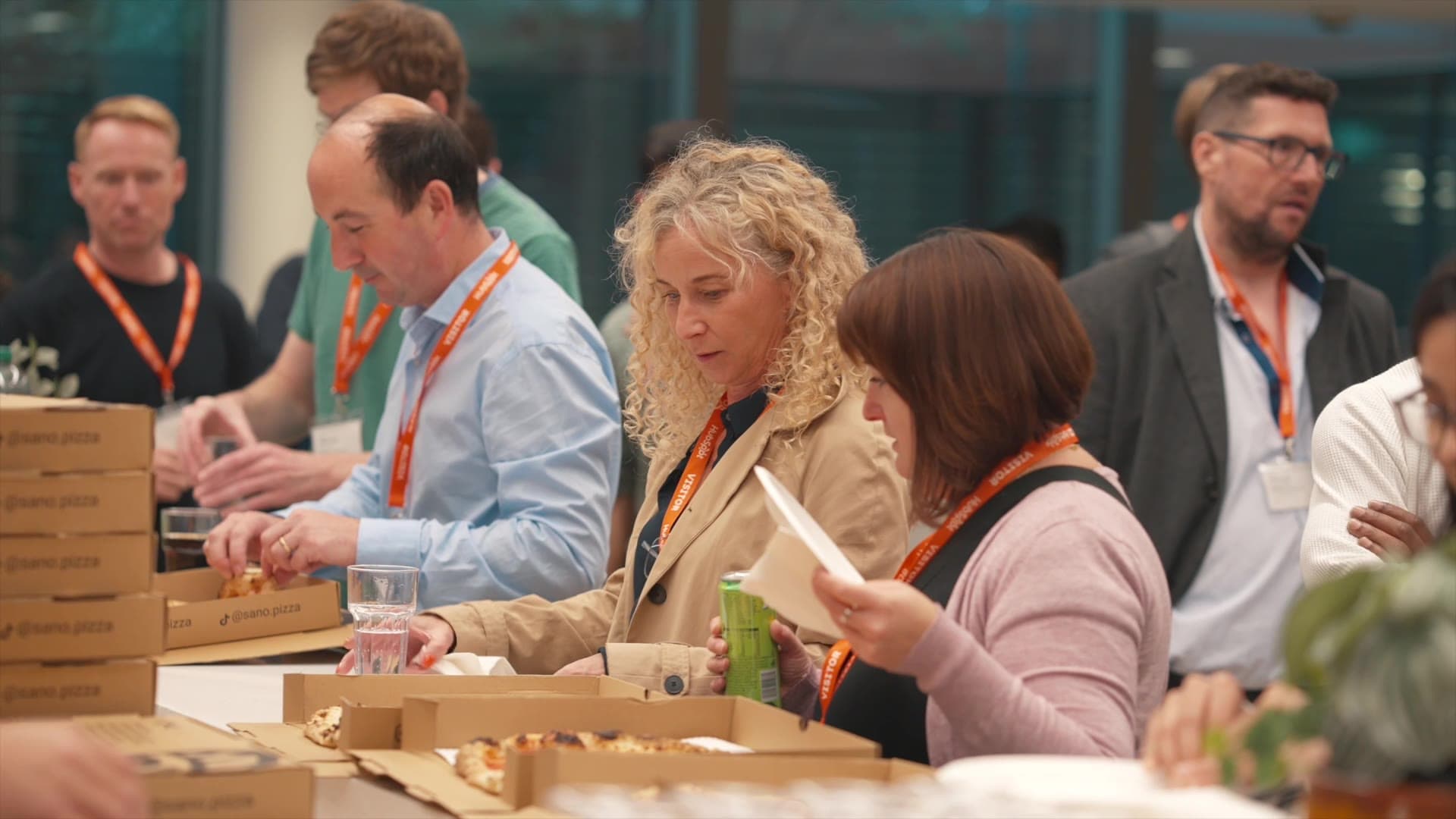
Avanti Rao and Micaela Serraiocco brought Women Who Build back with Give(a)Go. One of the first people Avanti met already had an app live on Base44, and spent the night helping beginners get started on theirs.
“Some evenings you leave with contacts. Monday night, I left with a feeling”
The workshop was called Hire Your First AI Colleague, and people did: they went from nothing to a working agent in one evening on Lua's AgentOS. One built a support agent for insurance enquiries.
“Rather than just learning about AI concepts, we had the opportunity to build and test an AI agent.”
HubSpot for Startups hosted a panel on what actually works when you take an AI product to market, with Harry Arkwright from ElevenLabs, Josh Shih from Corgi and Patrick Hegarty from Sensiba.
“AI can automate a huge amount of GTM. But it can’t replace understanding the customer.”
Day 6, Wednesday 7 October: The questions get harder
By midweek the sessions had moved on from what AI can do to how you run it: how you see what it's doing in production, and whether it has to live in someone else's cloud.
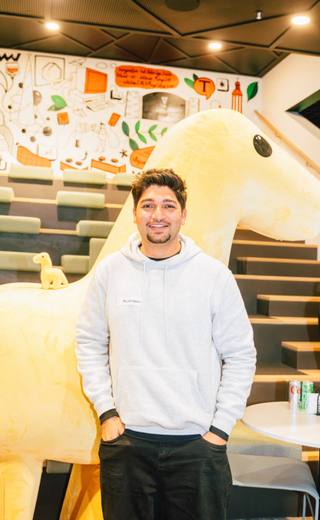
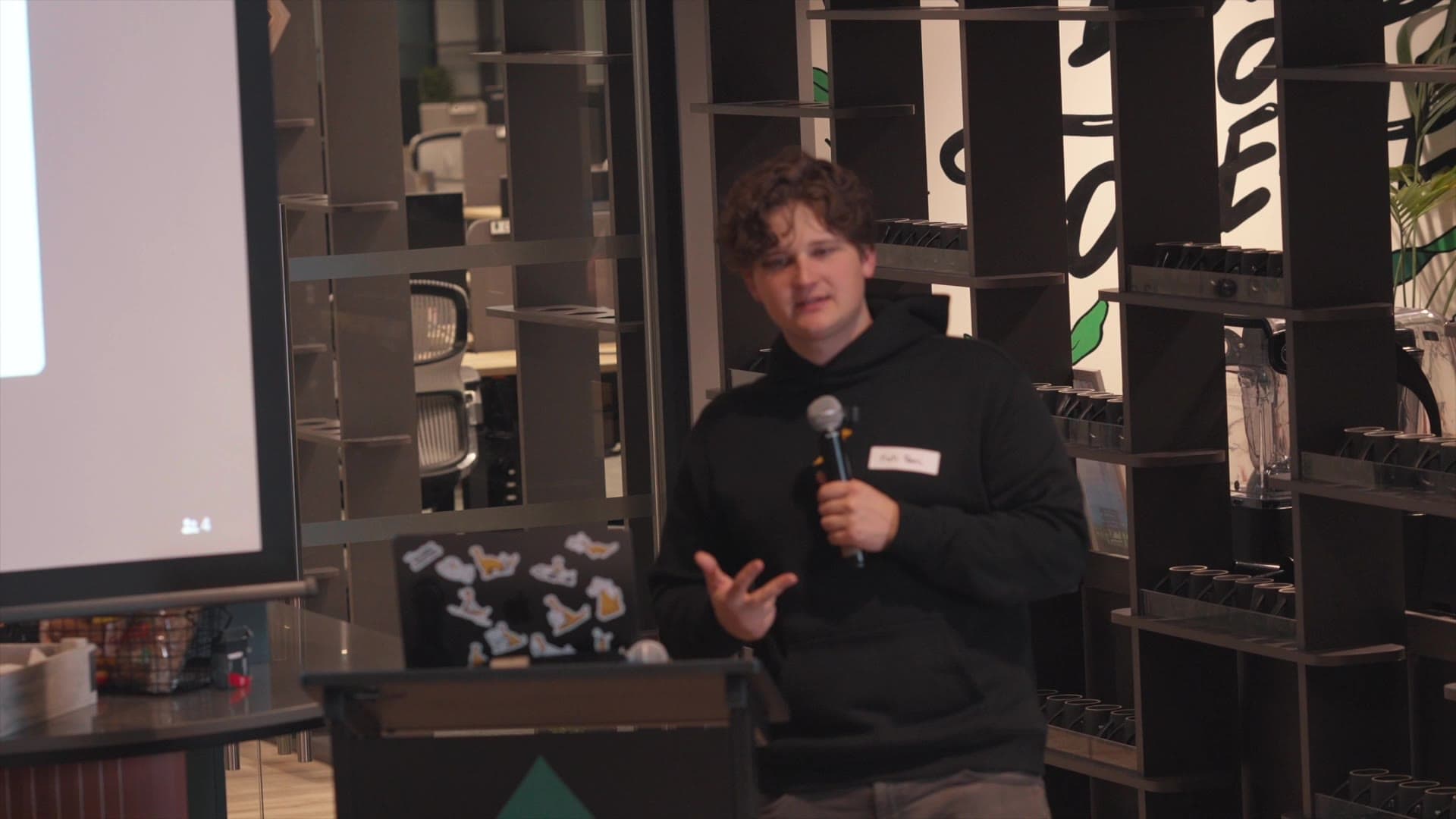
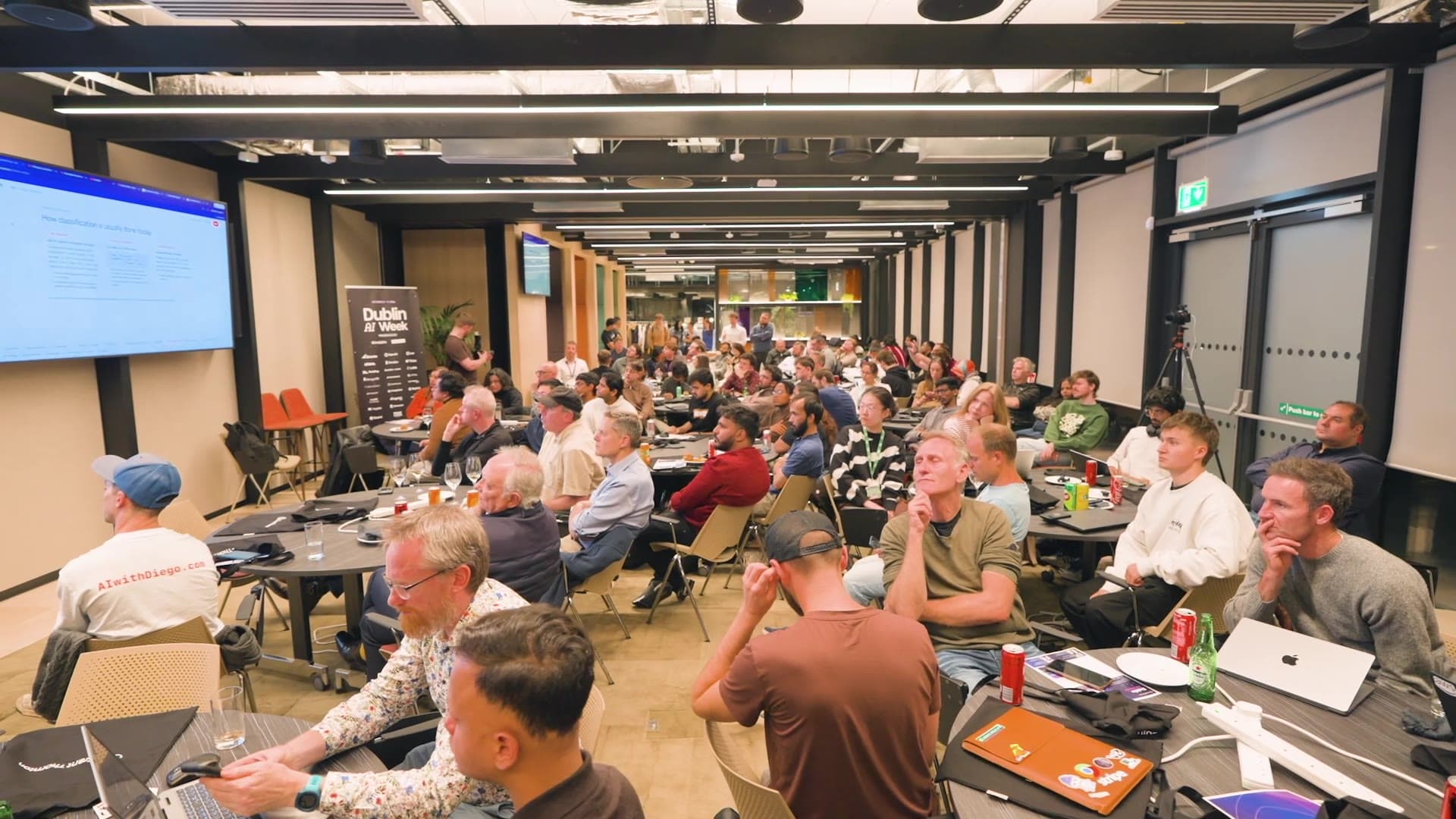
Bronto hosted an evening on observing and monitoring AI systems at MongoDB's Dublin office, and brought a giant yellow brontosaurus. It is in most of the photographs.
Watch the filmAI Observability & Monitoring · 1:05
Day 7, Thursday 8 October: Thursday at the Storehouse
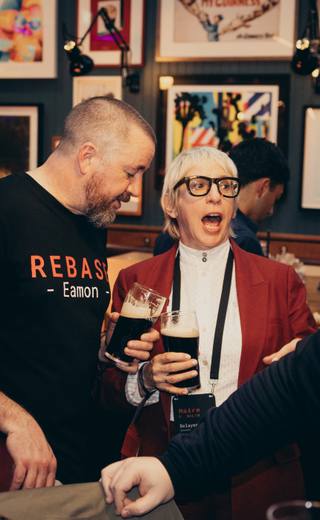
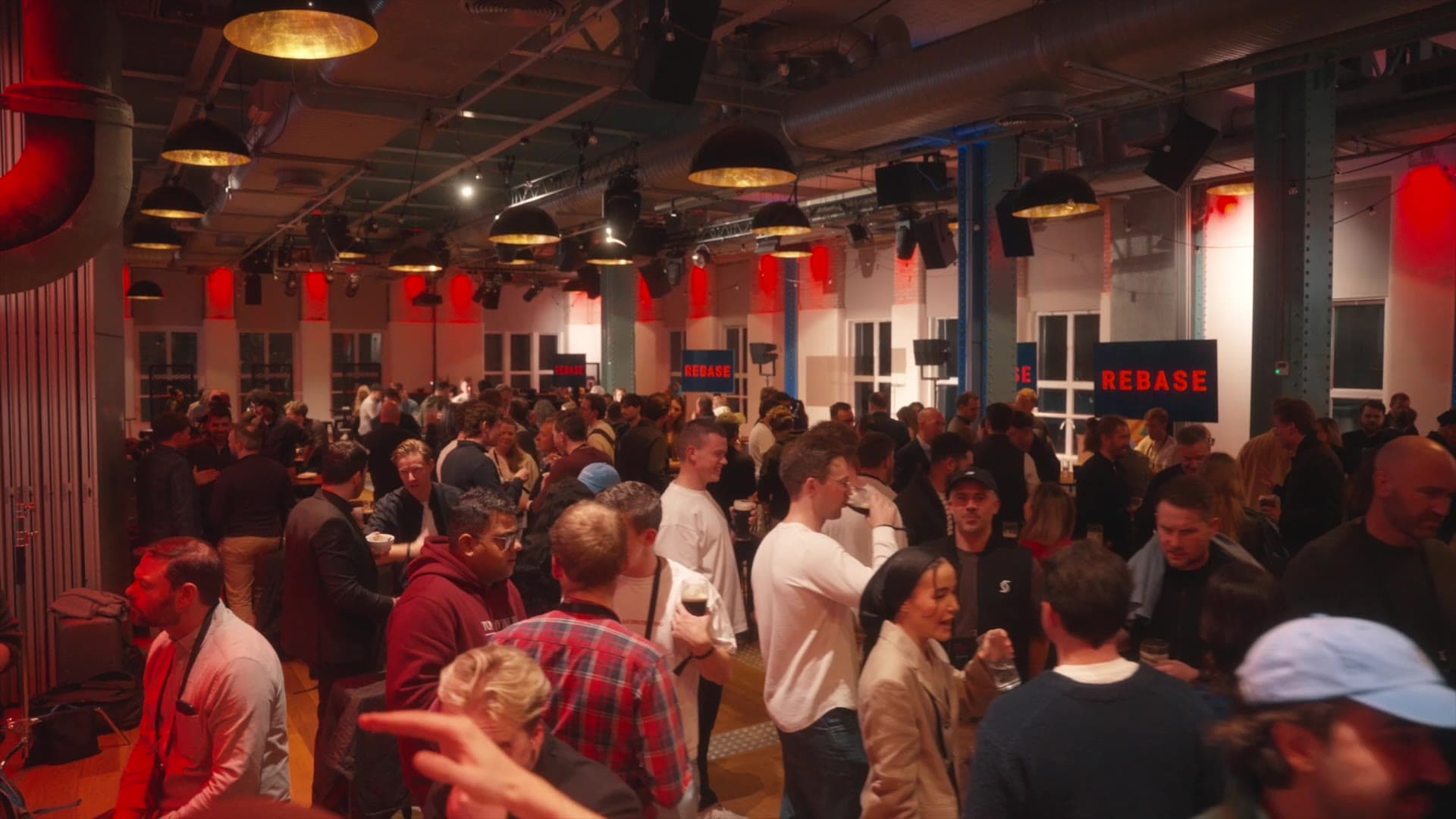
Rebase, the startup gathering run by Frontline Ventures and Baseline, ran back to back with Dublin AI Week. On Thursday its Dublin chapter ended at the Guinness Storehouse, with the result of the Pressure Cooker.
Guinness Storehouse
Rebase closing party
Over 100 teams applied to the Pressure Cooker: a week to start, build and launch a company from scratch. That night, one of them found out Baseline would invest €100,000 in it. Winmo AI, a company born at a hackathon two months earlier, made the top three.
Watch the filmRebase closing party · 1:06
“By themselves, they would have been notable events, but in combination, something really special to Dublin.”
The final day had five events, from a Notion student hackathon at lunchtime to a 21:00 start for Avalanche Team1. The last one we filmed was back at Dogpatch Labs, in the brick vaults under CHQ.
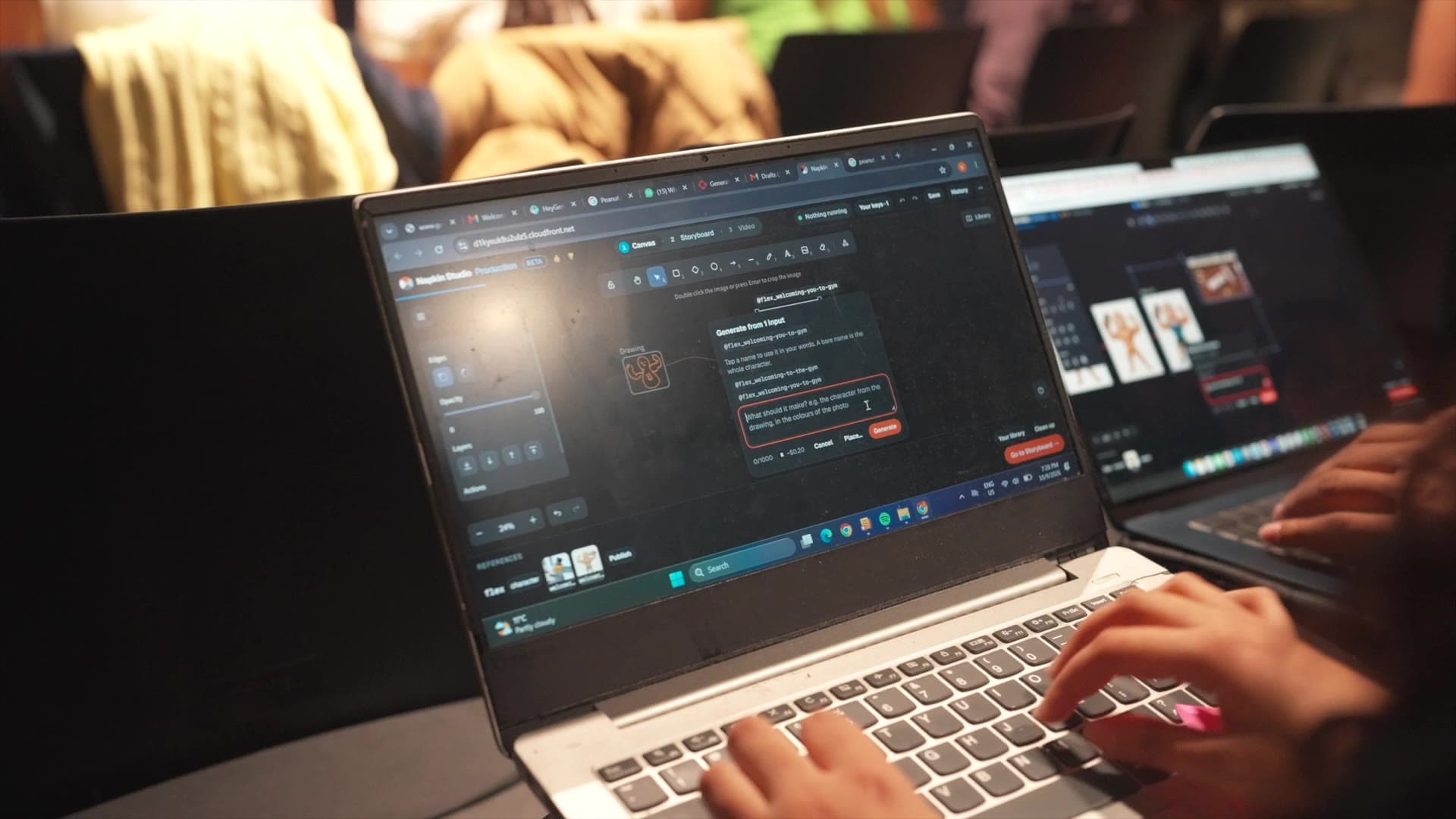
Give(a)Go and Dogpatch Labs handed people HeyGen, fal and Napkin AI, and a tight deadline. They went from a blank canvas to characters, storyboards and finished video ads.
The vaults under CHQ.
“One of the best ways to make new friends in a new city is to put a bunch of cool and creative minds in a room, give them amazing AI tools, a tight deadline, and see what happens.”
All 35 events were free and community-organised: run by meetups, startups and the companies that opened their offices for an evening. Each number below is printed with who said it.